
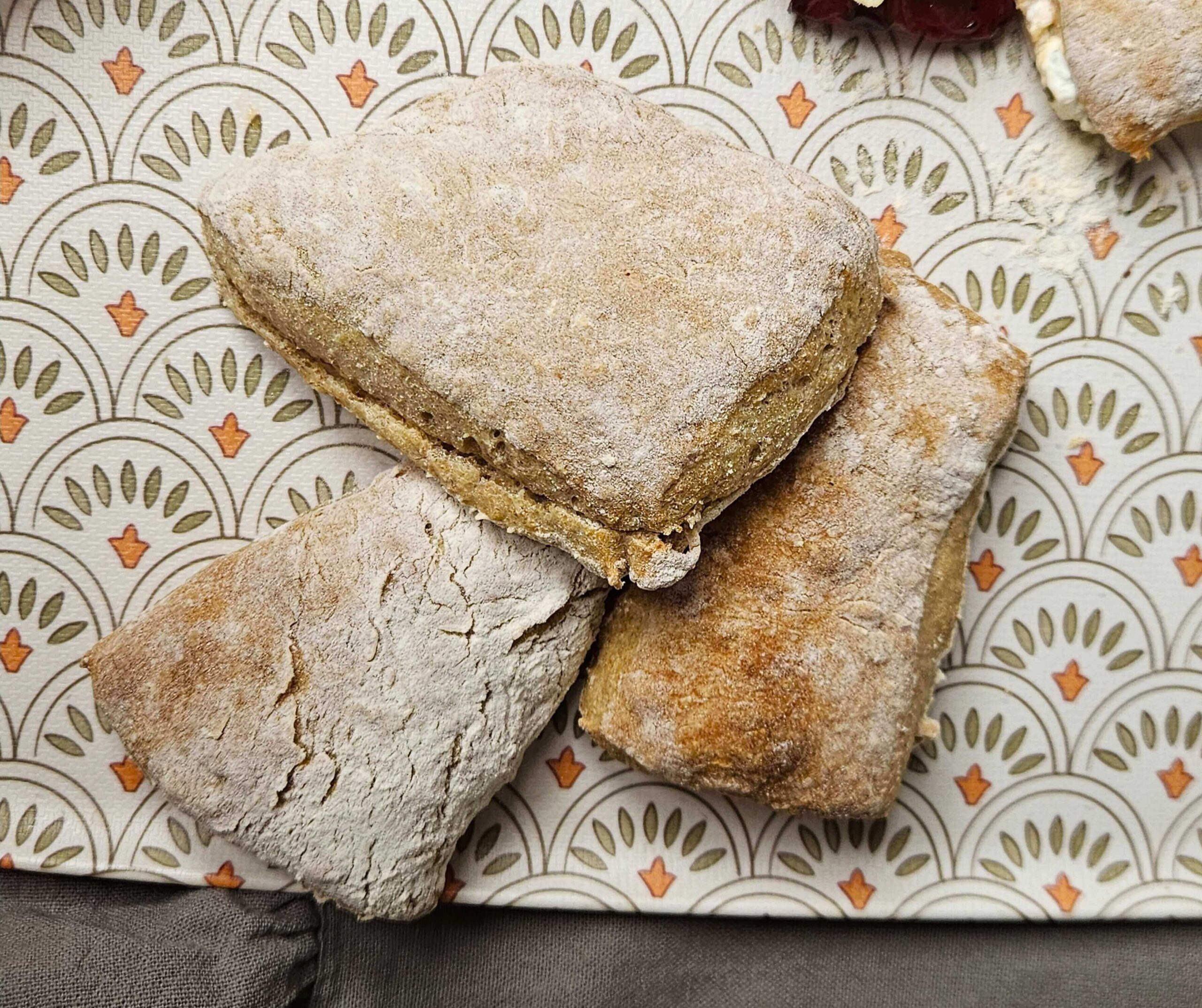
Homemade Ciabatta Bread is one of the easiest homemade bread recipes you can prepare, offering a crisp crust and it’s perfect for sandwiches. This homemade ciabatta bread recipe uses minimal ingredients, requires no complicated kneading, and can even be adapted into whole wheat ciabatta bread or whole wheat sandwich bread. Whether you’re searching for an easy ciabatta bread method, a rustic homemade bread, or a light and flavorful sandwich bread, this recipe delivers bakery-style results right from your kitchen.
What is Ciabatta Bread?
Ciabatta is a classic Italian bread known for its rustic shape, crisp golden crust, and beautifully open crumb structure. The name “ciabatta” means “slipper,” referring to the bread’s long, slightly flat, slipper-like shape. With its chewy interior and airy holes, ciabatta is perfect for sandwiches, bruschetta, and dipping into olive oil.
Why Is It Different Than Other Breads?
Ciabatta stands out for several reasons:
- High hydration dough: The dough contains a high water content, which creates large, irregular holes and a very light, airy interior.
- Folding instead of kneading: Unlike most breads that require kneading, ciabatta develops gluten through gentle stretching and folding.
- Signature crust: It bakes into a beautifully crisp, slightly blistered crust that contrasts with the soft center.
- Rustic shape: It is not shaped tightly like sandwich loaves; instead, it’s left airy and free-formed.
This combination gives ciabatta its unique texture and flavor — delicate, chewy, and ideal for hearty fillings.
Ingredients
Flour: The base of the bread. You can use regular white flour for a lighter, more traditional ciabatta, or whole wheat flour to create whole wheat ciabatta bread with a slightly nutty flavor and denser texture. The flour provides structure and helps the dough form gluten as it rests and folds.
Lukewarm Water: The high amount of water is essential to ciabatta’s open crumb. Lukewarm water helps activate the yeast and encourages fermentation, which creates the light air pockets the bread is known for.
Salt: Salt enhances flavor and regulates the yeast activity. Without salt, the bread would taste flat and the dough would rise too quickly, affecting texture.
Olive Oil: Olive oil adds a subtle richness and helps soften the crumb while keeping the crust thin and crisp. It also improves the dough’s elasticity and makes it easier to handle, especially when sticky.
Active Dry Yeast: Yeast is responsible for the rise. Instant yeast dissolves quickly and works efficiently, making the process easier and faster. It helps create a beautifully airy interior without requiring a long fermentation.
How to Make Ciabatta Bread at Home?
1. Prepare the dough
Mix lukewarm water and yeast in a large glass bowl. When the yeast begins to dissolve, add olive oil, flour, and salt. Mix with a spatula until you get a sticky, shaggy dough — this is normal for ciabatta.
💡 Tip: Don’t add extra flour to reduce stickiness. Ciabatta dough must stay loose to develop its airy structure.
2. First rest
Cover the dough and let it rest for 30 minutes. This period allows the flour to hydrate and begins gluten development without kneading.
3. Folding technique
After 30 minutes, wet your hands and gently fold the dough from the edges toward the center.
Repeat this folding process three times, every 30 minutes.
💡 Tip: Wet or oil your hands lightly before folding — this prevents sticking and keeps the dough airy.
❌ Mistake to avoid: Do not press or knead the dough aggressively. This will deflate the air bubbles that make ciabatta special.
4. Final rest
After completing the folds, let the dough rest for another 30 minutes. The dough will become smoother, elastic, and bubbly.
5. Shaping
Transfer the sticky dough onto a very well-floured surface. Dust the top lightly with flour. Gently stretch and shape it into a rustic loaf or divide it into two loaves.
💡 Tip: Use a bench scraper to move the dough without losing its air pockets.
❌ Mistake to avoid: Avoid over-shaping. Too much handling makes the loaf dense.
6. Baking
Transfer to a parchment-lined baking tray and bake in a preheated 220°C (430°F) oven for about 20 minutes or until deeply golden.
💡 Tip: For an extra crisp crust, spray a little water inside the oven right before closing the door.
Key Notes
- Ciabatta dough is naturally sticky — resist the urge to add too much flour.
- The folding method replaces kneading and helps build strong gluten strands for an airy loaf.
- Baking at a high temperature ensures maximum oven spring and a crisp crust.
- Whole wheat flour can be used, but it will result in a slightly denser loaf with a nutty flavor.
- Allow the bread to cool completely before slicing; cutting too early compresses the crumb.
Serving Tips
Perfect Sandwich Bread: Ciabatta’s airy interior makes it ideal for sandwiches with grilled vegetables, mozzarella, pesto, or deli meats.
Toast & Bruschetta: Slice, drizzle with olive oil, and toast for the perfect base for tomatoes, basil, ricotta, or avocado.
Breakfast Use: Serve with butter and jam, or use it for breakfast sandwiches with eggs and cheese.
Soup & Salad Side: Its crisp crust makes it great for dipping into soups or serving alongside fresh salads.
Garlic Bread: Turn your loaf into garlic ciabatta by brushing slices with garlic butter and toasting until golden.
FAQ: Homemade Ciabatta Bread
Why is my Ciabatta dough so sticky?
Ciabatta dough is naturally very wet and sticky because it uses a high hydration ratio. This is what creates the large, airy holes inside the bread. Avoid adding extra flour — instead, use well-floured surfaces, wet hands, or a bench scraper to handle the dough.
Can I make Ciabatta bread with whole wheat flour?
Yes! You can make whole wheat ciabatta bread by using part or all whole wheat flour. Keep in mind:
- Whole wheat flour absorbs more water
- The texture may be slightly denser
- The flavor will be nuttier
If using 100% whole wheat, you may add a splash more water to keep the dough soft and airy.
How do I know when my ciabatta is fully baked?
Your ciabatta bread is done when:
- the top is deeply golden
- the bottom sounds hollow when tapped
- the internal temperature reaches about 95°C (200–205°F)
Can I double this recipe?
Absolutely. Ciabatta handles scaling very well. Just be sure you have a bowl large enough to allow the dough to rise, and keep the same folding intervals.
Why didn’t my ciabatta rise properly?
Common reasons include:
- Yeast was expired or inactive
- Water was too hot or too cold
- You didn’t fold the dough enough
- Dough was overworked or deflated during shaping
- Oven was not fully preheated
Even with a flatter loaf, ciabatta will still taste delicious.
How long does ciabatta bread stay fresh?
Ciabatta stays fresh for about:
- 1 day at room temperature
- Up to 3 months in the freezer
Wrap tightly in foil or a bread bag to maintain freshness. Reheat in a hot oven for 5–7 minutes to restore crispness.
Ingredients
- 500 g flour (whole wheat flour also works)
- 400 ml warm water
- 10 g salt
- 2 tablespoons olive oil
- 1 pack (10 g) active dry yeast
Instructions
- Mix the base dough: In a large glass bowl, whisk together the lukewarm water and instant yeast until dissolved.
- Add remaining ingredients: Add olive oil, flour, and salt. Mix until a shaggy, sticky dough forms. Cover the bowl and let it rest for 30 minutes.
- Perform folds (3 times): Open the bowl and fold the dough from the edges toward the center. Repeat this folding 3 times total, spacing each fold 30 minutes apart.
- Final rest: After the last fold, let the dough rest one more time for 30 minutes.
- Shape the dough: The dough will be sticky — this is normal. Transfer it onto a well-floured surface. Sprinkle a little flour on top and gently shape it without pressing too hard.
- Transfer to baking tray: Place the dough onto a baking tray lined with parchment paper.
- Bake: Bake in a preheated 220°C (430°F) oven for about 20 minutes, or until the top is golden and crisp.
Notes
- Ciabatta dough is naturally sticky — avoid adding too much extra flour, or the bread will become dense.
- The folding steps help create the airy, hole-filled structure typical of ciabatta.
- For extra flavor, let the dough rest longer (up to 2 hours) between folds.
- A preheated oven is essential for a crisp crust and proper rise.
- You can shape the dough into one large loaf or two smaller loaves.