
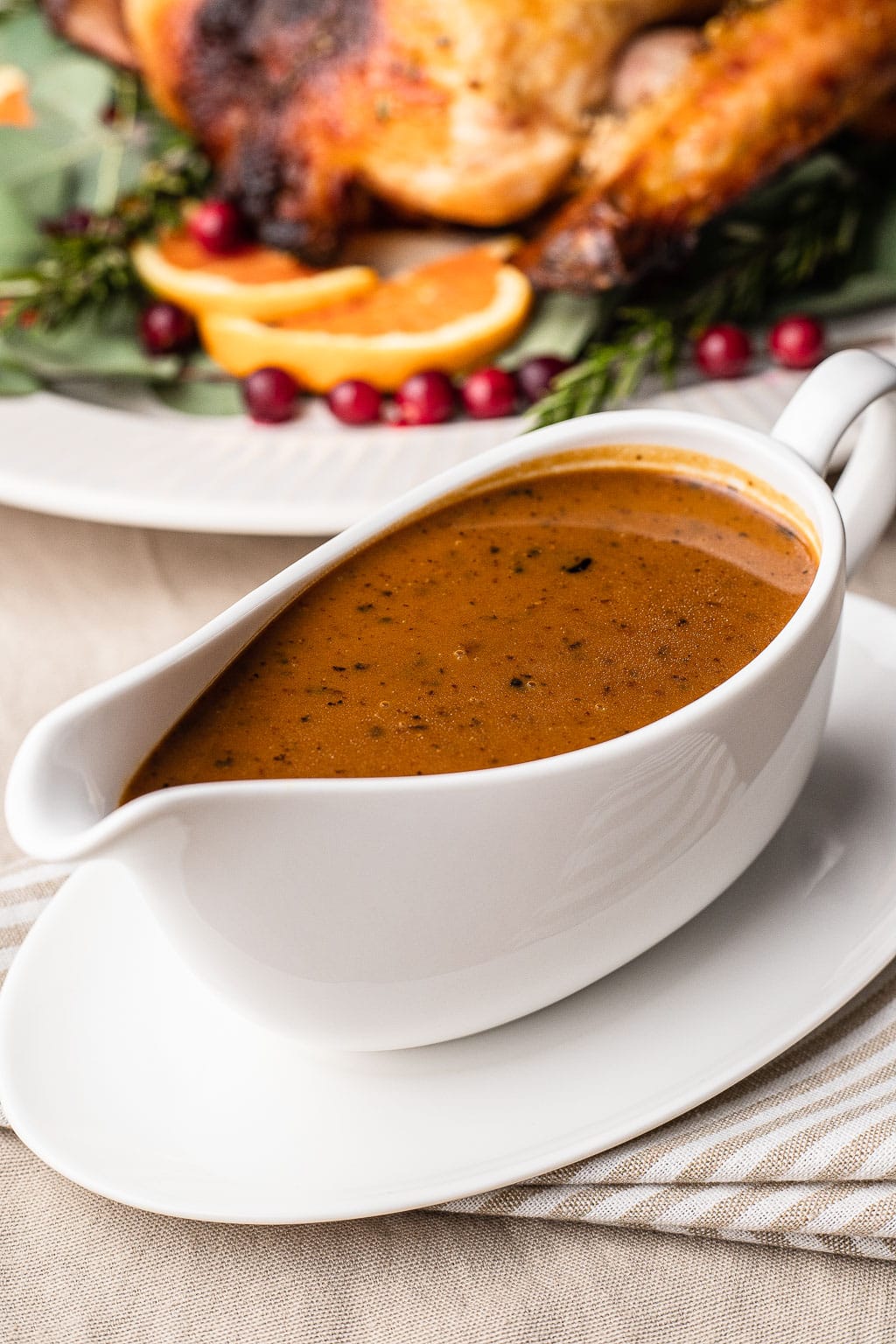
Homemade Turkey Gravy is the perfect finishing touch to enhance the taste of your meal with its deep, savory taste and creamy texture. Made from the flavorful drippings of a Roasted Turkey, this silky gravy is first to come to mind for Thanksgiving or holiday feast.
Ingredients
Turkey Drippings: These provide the base of the gravy, packed with flavor from the roasted turkey. The drippings carry all the rich, roasted essence of the turkey, making the gravy truly delicious.
All-Purpose Flour: Used to thicken the gravy, it creates a smooth and creamy consistency. If you prefer gluten-free, use cornstarch as a substitute.
Butter: Adds richness and a velvety texture, balancing the savory turkey flavors.
Turkey Broth or Stock: Provides additional liquid and depth of flavor. You can use homemade turkey stock or store-bought broth.
Salt and Black Pepper: Essential for seasoning, these enhance the flavors of the gravy. Adjust carefully since the drippings and broth might already contain salt.
Optional Herbs (thyme, sage, or parsley): Add a fresh and aromatic touch to complement the turkey.
How to Make Homemade Turkey Gravy?
Collect the Drippings: After roasting your turkey, carefully pour the drippings into a heatproof bowl or fat separator. Let them sit for a few minutes to separate the fat from the juices. Use 1/4 cup of the fat for the gravy and discard the rest.
Prepare the Roux: In a medium saucepan, melt 2 tablespoons of butter over medium heat. Add the all-purpose flour and whisk continuously for 2-3 minutes until the mixture turns a golden-brown color. This step ensures a flavorful base and removes the raw taste of the flour.
Incorporate the Drippings and Broth: Slowly pour the turkey drippings into the roux while whisking to prevent lumps. Gradually add the turkey broth, continuing to whisk until the mixture is smooth and begins to thicken.
Simmer and Season: Lower the heat and let the gravy simmer for 5-7 minutes, stirring occasionally. Season with salt and black pepper to taste. Add optional herbs like thyme or sage for an extra layer of flavor.
Adjust Consistency: If the gravy is too thick, add more broth, one tablespoon at a time, until you reach your desired consistency. If it’s too thin, simmer a little longer to reduce it.
Strain for Smoothness: For an extra-smooth gravy, strain it through a fine-mesh sieve before serving.
Key Notes
Make-Ahead Option: Prepare the gravy up to a day in advance. Reheat gently on the stovetop and add a splash of broth if it thickens too much.
No Drippings? No Problem: If you don’t have turkey drippings, substitute with 1/4 cup of butter and a splash of Worcestershire sauce for depth.
Gluten-Free Turkey Gravy: Use cornstarch or arrowroot powder instead of flour. Mix it with a little cold water to create a slurry before adding to the broth.
Flavor Enhancements: For an umami boost, stir in a teaspoon of soy sauce or a dash of cream for a luxurious finish.
Serving
Pairing with Turkey: Drizzle over Roasted Turkey for the ultimate flavor combination.
Perfect for Sides: Serve the gravy with Creamy Mashed Potatoes, or Roasted Summer Vegetables to elevate every bite.
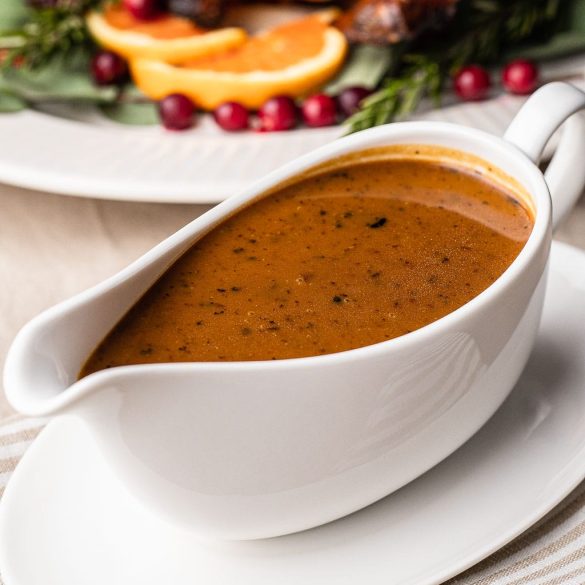
Presentation Tips: Pour the gravy into a warmed gravy boat to keep it hot at the table. Garnish with a sprig of fresh thyme or parsley for a polished look.
Holiday Hosting Hack: Keep the gravy warm during dinner by placing the gravy boat over a small candle warmer or using an insulated gravy pot.
Freezer-Friendly Tip: Leftover gravy can be frozen in an airtight container for up to 3 months. Reheat gently, stirring to restore the creamy consistency.
Ingredients
- 1/4 cup turkey drippings
- 2 tablespoons unsalted butter
- 2 tablespoons all-purpose flour
- 2 cups turkey broth or stock
- Salt and black pepper
- 1 teaspoon fresh or dried herbs (thyme, sage, or parsley), optional
Instructions
- After roasting your turkey, pour the drippings into a heatproof bowl or fat separator. Allow the fat to rise to the top, then skim off the fat, reserving 1/4 cup of the drippings.
- In a medium saucepan, melt the butter over medium heat. Stir in the flour and whisk continuously for about 2-3 minutes, until the mixture turns a light golden brown. This step removes the raw taste of the flour and develops a nutty flavor.
- Slowly pour the turkey drippings into the roux while whisking to avoid lumps. Gradually add the turkey broth, continuing to whisk, until the mixture is smooth and starts to thicken.
- Lower the heat and let the gravy simmer for 5-7 minutes, stirring occasionally. Season with salt and black pepper, tasting as you go. Add optional herbs for a burst of flavor.
- If the gravy is too thick, add a splash of broth or water. If it’s too thin, simmer for a few extra minutes to reduce it.
- For an ultra-smooth finish, strain the gravy through a fine-mesh sieve before serving.
Notes
- No Drippings Option: Substitute the turkey drippings with 1/4 cup of butter and a teaspoon of Worcestershire sauce for a similar depth of flavor.
- Make Ahead: Prepare the gravy a day in advance. Store it in an airtight container in the fridge and reheat gently on the stovetop, adding a bit of broth if needed.
- Gluten-Free Turkey Gravy: Use cornstarch or arrowroot powder instead of flour. Mix it with cold water to create a slurry before adding to the hot broth.
- Boost Flavor: Add a splash of white wine or cream for a luxurious twist.
- Storage Tip: Leftover gravy can be stored in the fridge for up to 3 days or frozen for up to 3 months. Reheat gently and stir to restore the texture.